|
JULY 21, 2026
PUBLISHER INSIDER
|
|
|
This week is the practical follow-up you asked for. Last issue we broke down the operator who grew Facebook website revenue 694 percent in 30 days.
Now the how. Three parts on driving traffic off Facebook without torching your reach, pulled straight from Meta's own guidance. The link-in-first-comment move most publishers still get wrong sits inside Part 2. And Instagram just started testing clickable caption links for the first time in its history. Don't miss this one.
The Publisher Insider newsletter is brought to you by Publisher in a Box-- the best of the best in publisher monetization.
|
|
|
🚨 INSIDER ANALYSIS OF THE WEEK - PART 1
How to Drive Traffic From Facebook Without Losing Reach
Last week we broke down an operator who grew Facebook website revenue 694 percent in 30 days by treating pages as the traffic engine, not the destination. Two sites combined went from $60,397 to $165,909 a month. This week is the practical follow-up. How do you actually drive that traffic while keeping your reach strong?
Every publisher hits the same wall. You want clicks to your site, but the moment you drop a link in the caption, distribution falls off a cliff. Most people blame the algorithm and move on. That is the wrong read. Facebook is not working against you. It is telling you exactly how it distributes content, and the play is to work with it.
Facebook prioritizes content that keeps the on-platform experience strong. A raw URL in the caption pulls people away before the post has had a chance to prove it deserves attention. The system naturally gives more room to native-first content because that content earns engagement where people already are. This is not a penalty. It is a preference, and it is consistent.
The data backs it up. Meta's own Widely Viewed Content Report shows that 97.3 percent of the most-viewed US post views went to content with no external link in the caption. That is not a subtle signal. Native content earns the widest distribution. Full stop.
Here is the principle that makes this work. Facebook tests every post on a small slice of your audience in the first 60 minutes before deciding how wide to push it. Think of that window as the audition. If the post earns strong engagement during that test, Facebook expands distribution. If people scroll past or click away to an external site before engaging, the test fails and the post stays small. Give that audition a clean, native post first and let it prove itself. Then attach the link. The post is the audition. The link is the offer.
Sequence it right and you keep the reach and get the traffic. You do not have to choose one or the other. The publishers pulling six figures a month from Facebook website revenue understand this. They are not fighting how Facebook distributes content. They are building their workflow around it.
Below in Part 2: the exact Facebook blueprint, straight from Meta's own guidance, including the link-in-first-comment move and the link budget most publishers do not know exists.
|
|
|
🧠 THE INFRASTRUCTURE BEHIND 300M+ FOLLOWERS
The Facebook Monetization Suite is the seven-deliverable system we use to move a page from posting to paying, personalized to your page and niche.
→ Facebook Automation Machine: a 75-node n8n workflow. Ten minutes a day runs it.
→ $10K/Mo Profit Playbook: a personalized 90-day roadmap. Consulting clients pay $8K to $25K for this piece alone.
→ Professional Asset Valuation: what your page is worth, using the same formula we broker pages with.
→ Plus four bonuses: content toolkit, payout protection, reach restoration, viral post psychology.
One onboarding form. Yours to own.
|
|
|
🚨 INSIDER ANALYSIS OF THE WEEK - PART 2
Facebook Is Telling You Where to Put Your Links. Here Is the Exact Setup.
Part 1 covered the principle: native post first, link second. Now here is how to wire that into your daily workflow.
Start with what Facebook itself is saying. Recently, multiple page owners spotted the same note inside their Professional Dashboard post insights: add your link in the first comment, not the caption. This was not a third-party hack or a guru tip. It was guidance surfaced by Meta inside its own tools. When the platform tells you where it wants links to live, the smart move is to follow it.
Here is the practical setup, broken into three pieces.
1. Link in the first comment, pinned.
Write a strong native post. No URL in the caption. Drop the link as the very first comment, then pin that comment so it sits at the top. This is the exact method Meta pointed publishers toward inside its dashboard. It keeps the post clean for distribution while giving your audience a clear path to the article.
2. Put your traffic links where they always work.
Meta tests link restrictions from time to time. Whatever the current test looks like, links placed in comments, affiliate links, and links to other Meta platforms all sit outside those restrictions. That is why the first-comment method should be your default. It keeps traffic flowing every day regardless of how the platform’s link rules shift. When Meta moves, you are already on the right side of it.
3. Native first, offer second.
The highest-reach play is a genuinely good native post with “link in comments” as the call to action. A link sitting in the post itself pulls less distribution, so the link belongs in the comment. The post does the reach work. The pinned comment does the traffic work. You are not hiding the link. You are sequencing it so the algorithm sees a native post first and rewards it with distribution. Your audience still gets the click. You still get the visit.
The takeaway is simple. No tool, no hack. It is sequencing and placement. Post to win reach, put the link where it keeps working, and let the native post carry the moments that deserve the most attention. This is not a workaround. It is how Facebook is telling you to operate right now.
Part 3 goes deeper: how the 2026 algorithm actually ranks content and the signals that decide whether your traffic engine scales or stalls.
|
|
|
💣 NewsBomb - Stop picking stories blind
NewsBomb is our Facebook publishing intelligence dashboard, the same tool we run on our own pages. It grades 542K posts across 59 niches, A+ to F, by how far each one beat its page's baseline. The winner is obvious before you commit.
Free browses every niche. Pro ($99/mo) tracks your own pages plus the full dashboard: best time to post, hottest niches, winning formats, CSV, and API.
Beta: $29.99/mo for 6 months. Enter BETA37 at checkout on the $99 plan.
Only 24 spots left.
|
|
|
🚨 INSIDER ANALYSIS OF THE WEEK - PART 3
How Facebook Ranks Your Content in 2026, and Why the Whole Model Works
Parts 1 and 2 gave the mechanics: post native, earn reach, then attach the link so traffic rides on earned distribution. Part 3 is the why. Once you see how Facebook ranks content in 2026, the whole model stops feeling like a workaround.
The 2026 algorithm is a discovery engine. On well-run pages, more than half of reach now comes from non-followers. Facebook predicts who will want the content and serves it to them whether they have ever seen the page or not. Your traffic engine does not depend on page size. It depends on how well each post feeds the three signals the algorithm rewards.
Signal 1:
Engagement velocity in the golden hour. The first 60 minutes after publish are a live test. Facebook shows the post to a small sample and watches what happens. If that sample engages fast, the system widens distribution. If it does not, the post flatlines. Protect that window. Reply to every comment quickly, because the reply-to-comment ratio is itself a ranking input. The algorithm reads conversation, not just reaction.
Signal 2:
Quality of engagement, not just volume. A share to a Story or a save carries more weight than fifty generic likes. Long comments beat one-word comments. Engagement bait like "comment YES" or "tag a friend" is actively penalized, so use open-ended hooks that invite real opinion. Ask a question people actually want to answer.
Signal 3:
Format and dwell time. Facebook leans toward short-form vertical video for discovery reach and measures dwell time plus comment sentiment on every format. Video is the fastest path into non-follower feeds, which is why Reels are the reach engine that grows the page and brings in new audience. Photo and text posts remain the core monetization play, but video is what pulls strangers into the ecosystem.
Now put it together. You build posts the algorithm wants to distribute: native, high-engagement, high-dwell. Then you attach the link once the post has earned its audience. The page feeds the website. The website monetizes the traffic. That revenue funds the rest of the business: content, newsletter, Google Discover, more pages. Publishing consistently at scale, 8 to 24 posts a day depending on page size, is how you find the posts the algorithm wants to push. Volume is how you find distribution.
You are not running a Facebook page. You are building a diversified publishing business, and Facebook is the fastest funding source from month one.
|
|
|
🧭 A BAD WEEK OR A BAD STRATEGY?
Google's rankings moved hard around July 18. Every tracking tool registered the spike, publishers reported swings in both directions, and Google has confirmed nothing. If your search traffic dipped last weekend, that is a bad week. It happens, and it usually reverts.
The bad strategy is slower and does not revert. Industry research now projects Google will send publishers half as much search traffic by 2027 as AI answers absorb the clicks. The traffic you lose to a volatile weekend comes back. The traffic you lose to AI answers does not.
There is one place in that shift where smaller publishers hold the advantage. A Semrush study of 50,000 brands found that the sites AI engines actually cite are not the biggest domains. They are the clearest experts on one topic. Depth beats size, and in most niches the source slot is still unclaimed.
|
|
|
🎯 THE GEO AUTHORITY SYSTEM
AI engines are already naming who to trust in your niche. Whoever they cite now becomes the default for the next decade. That ground is still open.
Get your LLM Visibility Evaluation across ChatGPT, Claude, Perplexity, and Gemini: a GEO Readiness Score out of 100, a three-competitor head-to-head, and a 90-day playbook built around your exact gaps. Plus a full PubScore diagnostic and a ready-to-use Claude context file. Delivered in 5 business days.
We built the scoring methodology and ran it on our own properties first. The AI referral traffic followed. This is the system we used.
|
|
|
🗞️ MORE NEWS STORIES
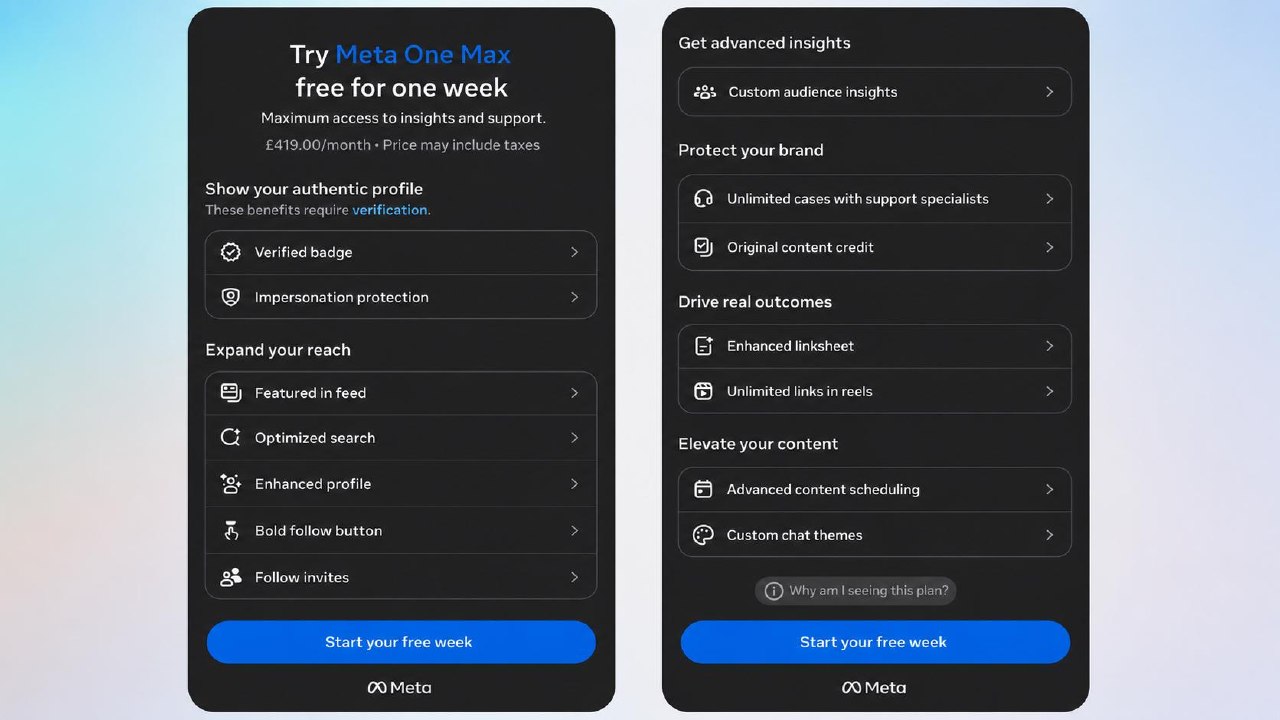
→ Meta Is Putting Links in Captions Now, Even on Instagram
Instagram is testing clickable links directly in post captions for the first time in the platform’s history. The test, confirmed by Meta to Engadget and first spotted by blogger Andrea Valeria, is limited to a small group of Meta Verified subscribers who can add up to 10 clickable links per month. Valeria shared a screenshot showing a Substack link working natively inside her caption, a surface Instagram has blocked since launch. Meta has not said whether the feature will expand beyond paying subscribers or roll out broadly. This is an Instagram-only test for now, not a Facebook change. But it signals something publishers should pay attention to: Meta is actively experimenting with how and where links function across its surfaces. On Facebook, the play that works today is still native content first with your link placed in the pinned first comment. That approach respects the algorithm’s preference for keeping users on-platform while still driving traffic to your site. The bigger question is not whether one test changes your workflow tomorrow. It is understanding the pattern: Meta keeps moving the rules on link placement. That is exactly what our Insider Analysis breaks down above, where links belong inside the Meta ecosystem right now.
→ The Pageview Era Is Dead. Your Audience Data Is the Product Now
Leverage Lab's AnnMarie Wills, writing in a Sell Sider column for AdExchanger, makes the case that agentic search has moved the death of the pageview from gradual to immediate. The survivors will not be the publishers who replace lost search traffic. They will be the ones who monetize the audience relationships they already own. The core argument: most publishers have spent years building first-party data infrastructure, consent management, and subscriber programs. But they are only monetizing that data through on-site display, direct sponsorships, and event packages. The verified identity and behavioral intent data they collect sits largely untapped. Meanwhile, platforms like LinkedIn and Google charge premium CPMs to approximate the same audiences publishers already know with certainty. LinkedIn built a billion-dollar business selling access to professional audiences that B2B publishers had often assembled first, with greater depth and verified intent. The difference was activation infrastructure, not data quality. The shift the column describes is from selling impressions to selling audience intelligence: verified, segmented, purchase-stage signals packaged for buyers across channels. For publishers building diversified businesses across Facebook, websites, newsletters, and Google Discover, this reinforces why owning your audience across every channel matters. The traffic source is not the asset. The relationship with a known, engaged reader is. Every platform you publish on should feed that first-party data engine.
→ Meta AI Adds Parental Alerts for Teens in Crisis
The chatbot will now notify parents when a teen’s conversation suggests they may be at risk of self-harm, with links to support resources sent alongside the alert. It is live now for Instagram parental supervision in the US, UK, Australia, and Canada, and goes global by year-end. Meta is also building a system that contacts emergency services when any conversation, at any age, points to imminent risk. The pattern to watch is not this one feature. It is that every AI product Meta ships now arrives with a safety layer attached, and Meta is building those layers before regulators force the issue, not after. For Facebook publishers, the read is directional, not operational. Nothing here touches distribution or your CM checks. But it tells you where enforcement is looking: minors, sensitive content, anything close to AI. The niches that sit clean on that map are adult audiences in verticals like finance, sports, and food. A platform investing this much in safe AI is a platform building for the long haul, which is what you want under a channel you depend on. Stay positioned there.
|
|
|
P.S. If you only act on one thing today: 24 of the 37 NewsBomb beta spots are left at $29.99/mo instead of $99. When the code dies, the discount dies with it.
*To grab one: create your account, pick the $99/mo plan, and enter promo code BETA37 at checkout. The price drops on the spot.
|
|
|