|
APRIL 21, 2026
PUBLISHER INSIDER
|
|
|
Facebook publishing moves like a market. Reach cycles compress, RPMs swing with quarterly budgets, and the operators who read the signals early capture the upside. Publisher Insider is the weekly briefing for CEOs, founders, and operators running serious publishing portfolios, covering the macro trends and micro moves that compound into revenue.
Publisher Insider is brought to you by Publisher in a Box-- the best of the best in the world at publisher monetization.
|
|
|
🚨 INSIDER NEWS OF THE WEEK
From zero to Content Monetization invite in 3 weeks on average -- the fastest window we've ever seen
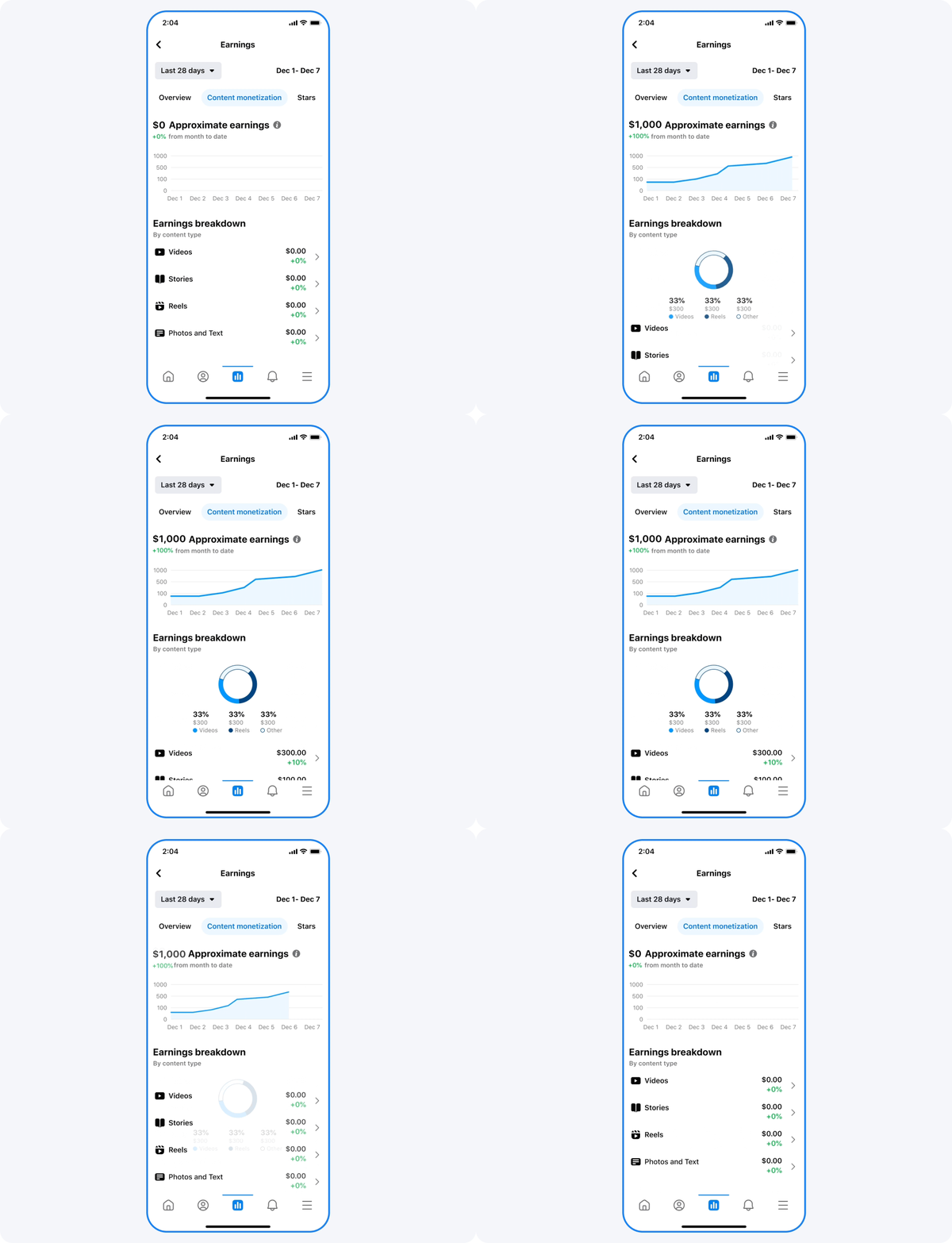
The average time from the launch of a brand-new Facebook page to a Content Monetization invite has compressed to just 3 weeks. Shortest interval we've ever tracked.
For context: this window used to sit at 3-6 months. Then 2-3 months. Today we're seeing pages hit the invite threshold in roughly 4 weeks, with some landing inside of 3.
The read for publishers: a page launched today can be generating cash flow before month-end, even in a compressed RPM environment. Barrier to entry has rarely been lower. ROI window on new page builds has rarely been shorter. Every week of delay is capital left on the table.
One caveat. The invite is only the gate. The first 30 days post-monetization determine whether the asset compounds or plateaus. Curation, cadence, and format discipline separate the pages that scale from the ones that stall.
More industry signal at the bottom of this newsletter. 👇
Estimate your Facebook pages' potential revenue with our Industry-based Facebook Revenue Calculator
|
|
|
⚠️ MORE INSIDER NEWS
RPMs and views starting to recover after a brutal last several weeks
After a significant end-of-Q1 drawdown driven by market volatility, total views and Content Monetization RPMs across our partner network are beginning to recover. Publishers can exhale, but we're not out of the woods yet.
The recovery follows the pattern we see every cycle. Q1 budgets run dry, RPMs compress, then fresh Q2 capital gets deployed and the ecosystem rebuilds. This dip was sharper because of the macro overlay, but the underlying mechanic hasn't changed. Ad dollars are flowing back in, and reach is climbing alongside them.
What's clear is that operators launching multiple pages right now are winning on both sides of the trade: faster invites on new builds, and recovering RPMs on existing portfolio. The publishers positioning now are the ones capturing the upside when the full recovery lands alongside the broader market.
|
|
|
📈 CHART OF THE WEEK
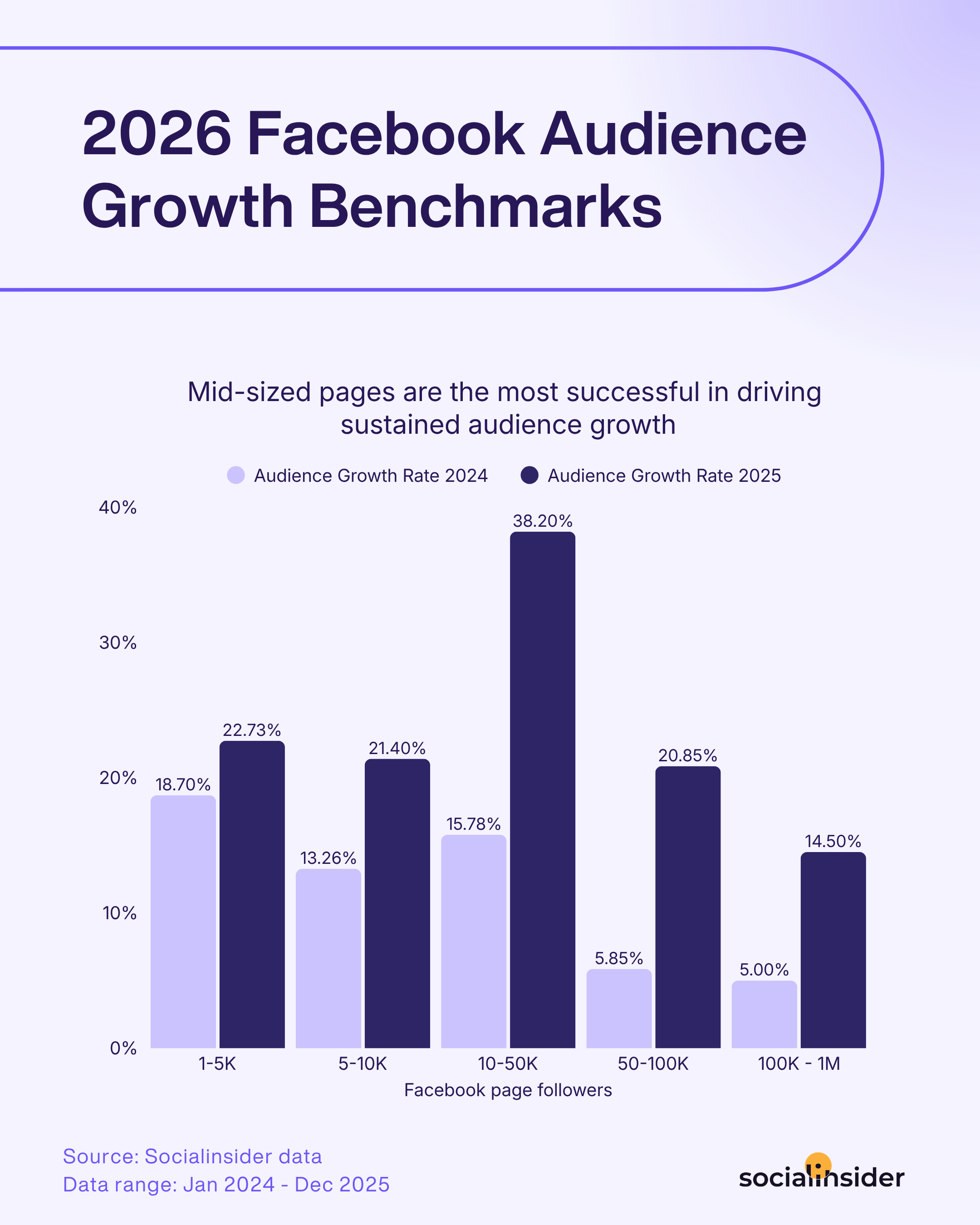
Meta is quietly pivoting toward a text-heavy publishing model, mirroring the massive success X has had with Articles. Most of the market hasn't priced this in yet.
Two forces are driving it. Long-form text keeps users on-platform longer than any other format, and Meta's AI systems run on written content. Text is the fuel. The more original writing lives natively on Facebook, the better their models get and the less reason they have to send traffic off-platform.
Instagram Notes is the early signal. Mosseri confirmed adoption is growing at a "wild pace," particularly with younger users. Expect the same playbook to roll out to Facebook publishers, with longer-form capabilities that compete directly with X Articles and Substack.
The implication is structural. Instead of publishing articles on your own website, you'll publish directly on Facebook. Operators building native Facebook editorial muscle now are the ones who will dominate the new surface when it rolls out.
Build a volatility-proof Facebook publishing enterprise with our Elite Facebook Consulting program
|
|
|
💬 Q&A OF THE WEEK
Direct from our exclusive Whatsapp community, Kris asks:
"First 24 hours of CM made $96. Obviously I'm super motivated to beat that, but I don't want to kill reach by posting too much. What do you guys think would be the upper limit of daily posts, if there is one? Right now I'm doing 5-7 per day."
Congrats on getting in, Kris. Your instinct to protect reach is right, but you're under-posting for where you are. The algorithm doesn't penalize volume, it penalizes weak supply.
Here's the cadence we recommend as a starting point, ramped in three phases. All times ET.
Week 1 (8/day): 6 Branded Viral Memes + 2 Viral Text Posts. Slots: 8am, 10am, 12pm, 1pm, 3pm, 6pm, 7pm, 8:30pm, 10pm.
Weeks 2-3 (9/day): add 1 Image + Blog Post at 11am.
Weeks 3-6 (12/day): 8 Branded Viral Memes + 2 Text Posts + 1 AI Quote + 1 Image + Blog. Extend to 10am-11pm, add 2pm, 4pm, 9pm slots.
Format timing: memes throughout the day, Text Posts at 12pm and 7pm, AI Quotes at 3pm and 6pm, Image + Blog at 11am.
Start with Week 1 to set baseline, then compound from there.
Volume with the right cadence is how you scale into the top of the distribution.
Join some of the best publishers in the world in our private Whatsapp community
|
|
|
🗞️ MORE NEWS STORIES
→ Claude Design Launches for Creators.
Anthropic launched Claude Design last week, a prompt-based tool for generating polished visuals including social media assets, slide decks, one-pagers, and marketing collateral. For Facebook publishers, the use case is obvious: spin up templated post designs, headline graphics, and Reels covers at the speed of typing. Upload your brand assets once, Claude builds a design system around them, and every subsequent asset stays on-brand automatically. Available to Pro, Max, Team, and Enterprise subscribers. The cost of producing high-volume visual content just dropped. Operators who integrate this into their production pipeline first will see the biggest compounding effect on output.
→ Google's AI Overviews Hit 91% Accuracy. That's the Problem.
A new analysis by AI startup Oumi, commissioned by The New York Times, found that Google's AI Overviews are accurate 91% of the time on Gemini 3, up from 85% on Gemini 2. Sounds impressive until you run the math: Google processes roughly 5 trillion queries a year. A 9% error rate translates to tens of millions of wrong answers per hour. More concerning, Gemini 3 produces "ungrounded" responses 56% of the time, meaning the AI cites websites that don't actually support the information it provides. The implication for publishers is twofold: first, every AI Overview is a query that didn't click through to your site. Second, your content is being cited in hallucinated answers you didn't write and can't control. Google's self-sabotage continues. The traffic that used to come from search is migrating to platforms where publishers still control the surface.
→ Facebook's Camera Roll Scan Rolls Out.
Meta launched an opt-in feature in the U.K. and E.U. that scans users' camera rolls to recommend photos, collages, and auto-generated videos to share. Users review privately before posting, and the feature can be disabled anytime in settings. A similar experiment ran in the U.S. last year. The story behind the story: Meta is aggressively hunting for more original content to keep users sharing and, more importantly, to feed its AI training pipelines. Posting activity has been in structural decline across public social for years, and Facebook needs fresh supply. For publishers, this is another data point in the same macro thesis: Meta is pulling every lever it has to boost original content volume on-platform. That tailwind is flowing directly into the monetization pipeline. Original operators win.
|
|
|
P.S. Curious what your politics page could earn under full PIB management? Left, center, right -- we run the industry's top turnkey program, 100% performance-based. Estimate your revenue here.
- PIB
|
|
|